MevaSearch vs PrivacyWall: two private search engines compared
PrivacyWall is a free search engine that promises not to track you and adds apps with a built-in ad blocker. MevaSearch is a Polish, subscription based search engine without ads, with AI and specialist sources. Here is how they differ and which one suits you better.
Who is behind PrivacyWall and MevaSearch
PrivacyWall is a division of Social Game Media Inc. Besides the search engine, it offers apps for Windows, Android and iOS, as well as browser extensions.
MevaSearch is a Polish search engine developed by WebOrbiton and created by its owner, Igor Oprządek. It focuses on one thing, search, and is funded only by subscriptions. There are no ads, we do not build user profiles and we do not keep a search history linked to your account.
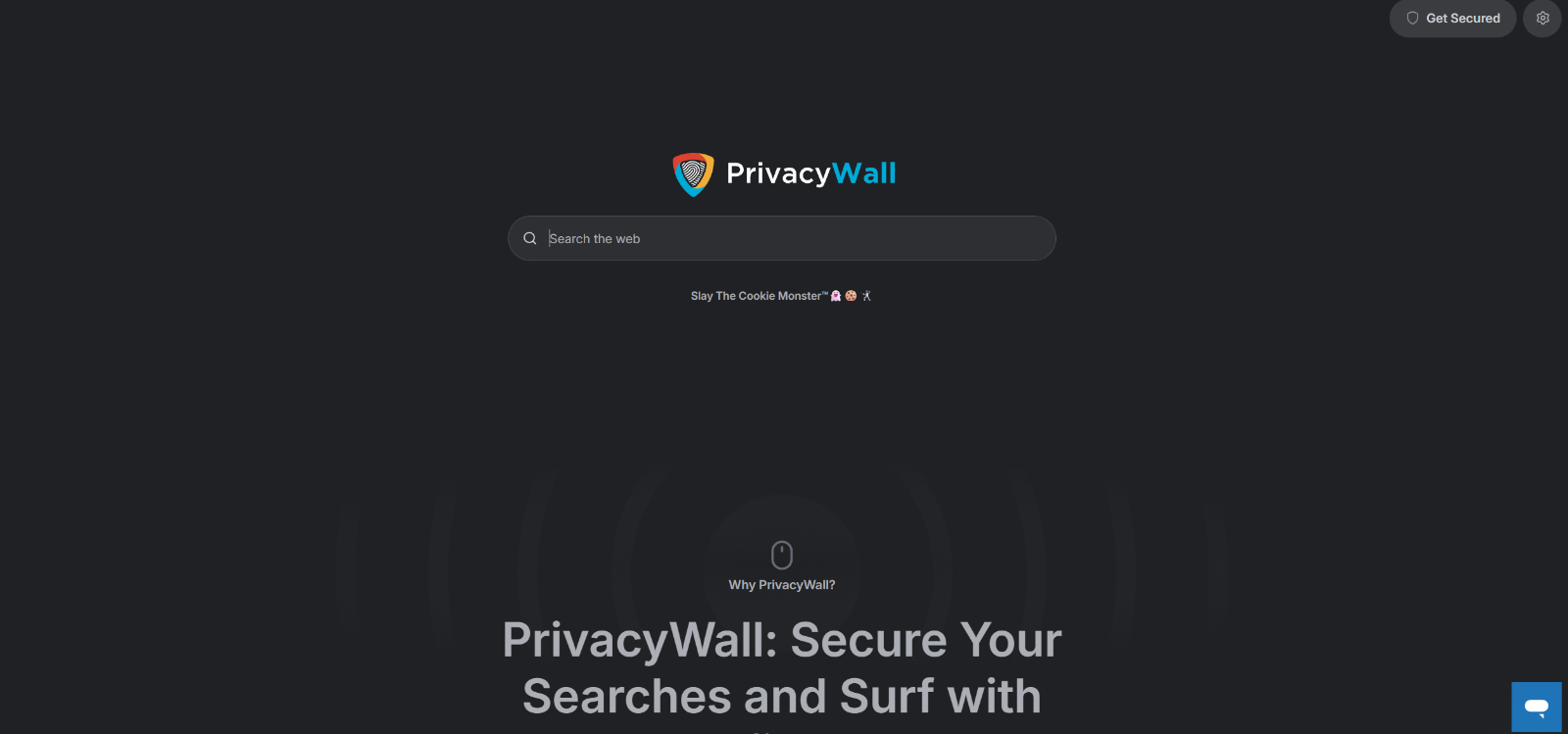
Where the results come from
PrivacyWall says its web results are powered by a major search engine that is not Google, but it does not name it. As its privacy policy admits, this partner may collect information such as your IP address and browser details. Video search uses the YouTube API, and the weather comes from Apple Weather: PrivacyWall works out your approximate location from your IP address on its own servers and sends Apple only the coordinates, without the IP address.
MevaSearch is open about where its results come from. It combines results from the Brave Search API with its own Polish index WebAtlas and Wikipedia, and when you want to see more, it adds results from the independent Mojeek index. For technical, scientific or book related queries, specialist sources appear as well, including Stack Overflow, MDN, OpenAlex, Europe PMC, Zenodo, Open Library, Codeberg and the CIRCL vulnerability database for CVE numbers.
PrivateView and CloakView
Both search engines let you look at a website without connecting to it directly. PrivacyWall does this with PrivateView, which, according to its description, lets you preview sites from the results without sharing your IP address with them.
MevaSearch shows a CloakView button next to every result. It opens the page through MevaSearch, so the website does not connect to you directly, and the page’s scripts are removed. You can hide the button in the settings.
Apps, extensions and ad blocking
This is where PrivacyWall has a clear advantage. Its apps for Windows, Android and iOS come with a built-in ad and tracker blocker, and its extensions for Edge, Safari, Chrome and Firefox set PrivacyWall as your browser’s search engine.
MevaSearch does not block ads on the websites you visit, but it takes care of what happens in the results themselves. NetKrypton checks domains for scams and warns you about suspicious websites, results are marked when a link is dead, and tracking parameters are removed from links. In the settings you can also stop telling websites that you came from MevaSearch.
Privacy in detail
PrivacyWall uses HTTPS by default, and a meta referrer tag keeps the websites you visit from seeing your query. The company says it collects only aggregate statistics, such as page views and country, and that its cookies only remember your settings and contain no personal data.
MevaSearch requires an account because it is a paid service, but it does not build a user profile, does not keep a search history linked to your account and shows no ads, so there is no one to pass data about your searches to for advertising.
Settings
PrivacyWall offers a set of basic settings: font, title and description size, SafeSearch, opening results in a new tab, infinite scroll, description length and units.
MevaSearch gives you far more options. You can change colours, fonts, layout and background, choose which blocks appear in the results, set how many extra links appear under a result and even add your own CSS. In Manage results you can pin trusted domains and block the ones you do not want to see, and in Orbit you can write your own rules for ordering results.

AI
On the pages we checked, PrivacyWall does not mention any AI features.
At MevaSearch, every AI feature runs on Claude by Anthropic. That covers short summaries above the results, MevaSearch AI chat, which remembers the conversation and cites a source for each piece of information, related searches and photo search. Requests reach Anthropic from our servers without any account details, and under Anthropic’s commercial terms, data sent through its API is not used to train its models. AI answers are included in every plan, from 200 a month on Lite to 3,000 on Pro.
Prices
PrivacyWall is free. We did not find a paid plan on the pages we checked.
MevaSearch Lite costs 4.99 dollars a month and includes 500 searches and 200 AI answers. Plus costs 14.99 dollars for 1,500 searches, 1,000 AI answers and two extra profiles. Pro costs 24.99 dollars and gives you unlimited searches, 3,000 AI answers and four profiles. The Lite plan comes with a free trial of 3 days, and MevaSearch prices include VAT.
Where PrivacyWall is stronger
PrivacyWall is free, has apps with an ad and tracker blocker for three systems and extensions for four browsers. If you want to switch search engines in one step and get rid of ads on websites at the same time, it is a convenient option.
What makes MevaSearch stand out
MevaSearch gives everyone search without ads from the first query and is open about where its results come from. On top of that you get AI answers with sources, specialist results for developers and researchers, NetKrypton warnings about scam websites, the option to pin or hide domains, !bang shortcuts, dead link markers and removal of tracking parameters from links. There are also separate tabs for images, videos, news, music and podcasts, family profiles, a plan for businesses and an interface in 19 languages.
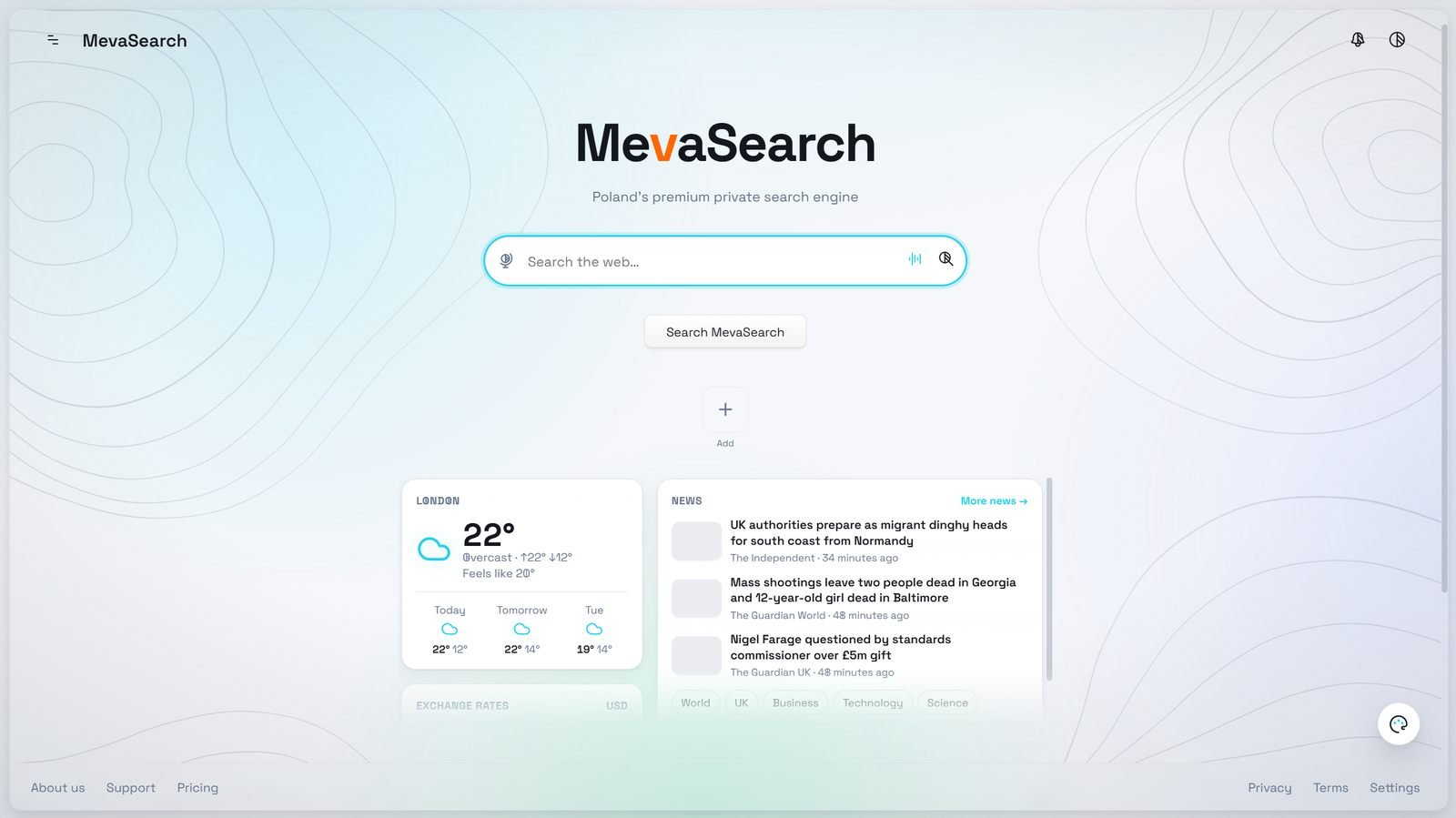
Which one should you choose
If you are looking for a free search engine with apps that also block ads, PrivacyWall is a good choice. If you want to know where your results come from and you care about AI by Anthropic, specialist sources, extensive settings and family profiles, MevaSearch will suit you better.
With the 3 day trial of MevaSearch Lite, you can compare both search engines side by side.
 MevaSearch vs Aidealio: two Polish search engines with their own index
 MevaSearch vs Bing: private paid search against Microsoft’s search engine
 MevaSearch vs DuckDuckGo: free private search against paid search without ads
 MevaSearch vs Ecosia: two European search engines with different missions
 MevaSearch vs Google: a paid private search engine against the free giant
 MevaSearch vs Kagi: comparing two ad-free paid search engines
 MevaSearch vs MetaGer: two ad-free European search engines compared
 MevaSearch vs Swisscows: Polish and Swiss private search compared
 MevaSearch vs Uruky: two European paid search engines compared