MevaSearch vs Google: a paid private search engine against the free giant
Google is free and is the search engine most people know. MevaSearch costs a few dollars a month. The difference in price comes from a difference in business model, and that model decides what happens to your searches.
Free with ads or paid without ads
Google Search is free because it is funded by advertising. According to Alphabet’s financial reports, advertising is by far the largest source of the company’s revenue, and search ads are the biggest part of it. In its privacy policy, Google says it may show you personalised ads based on your interests and activity.
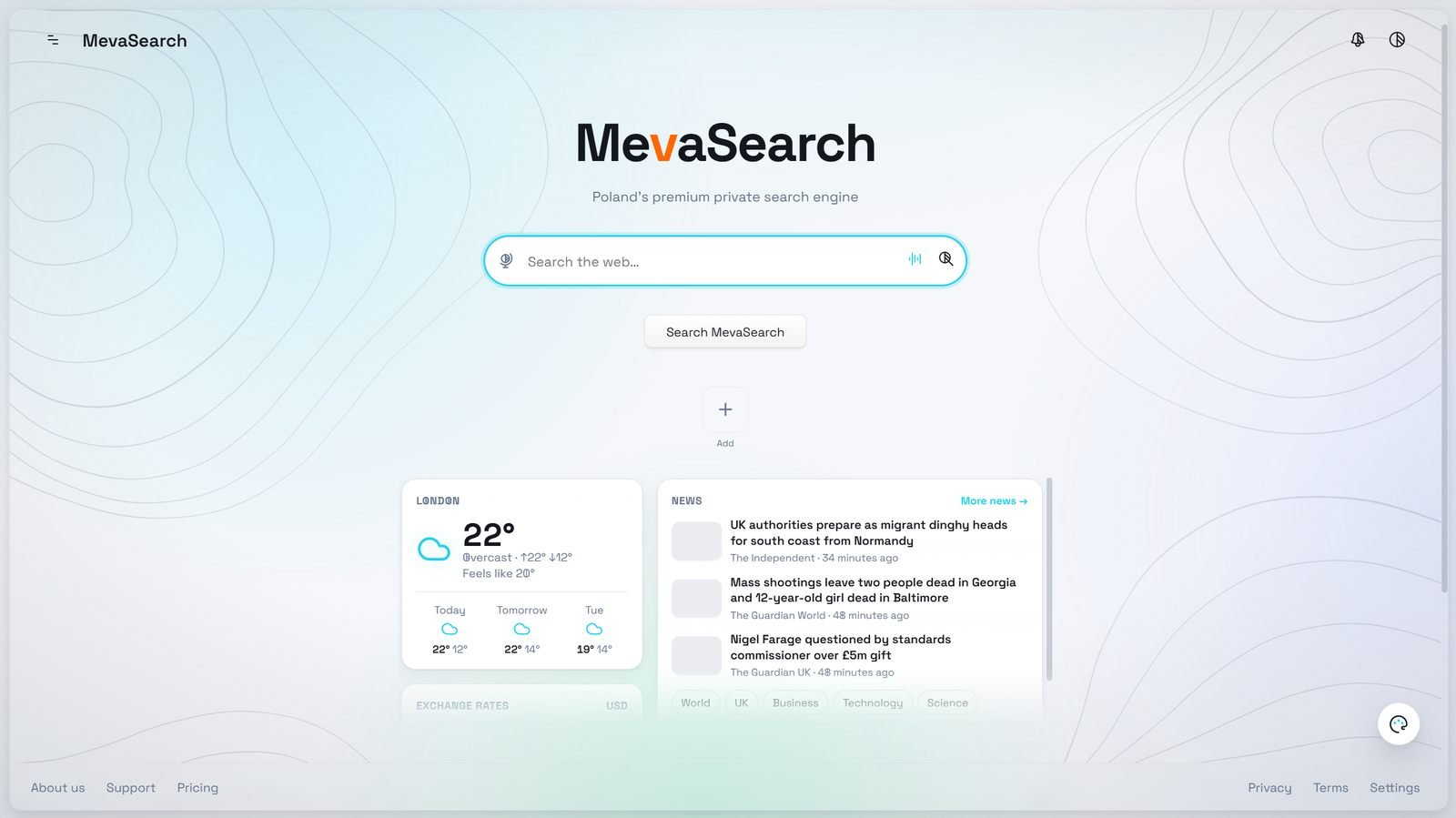
MevaSearch is a Polish search engine created by Igor Oprządek and the WebOrbiton team, and it works the other way round. You pay a subscription, so there are no ads, we do not build user profiles and we do not keep a search history linked to your account. We earn money only when you are happy enough to keep paying.
Where the results come from
Google has its own enormous index. In its explanation of how Search works, Google says the index covers hundreds of billions of webpages and is well over 100,000,000 gigabytes in size. No other search engine comes close to that scale, and it is worth saying so openly.
MevaSearch combines results from the Brave Search API, its own Polish index WebAtlas and Wikipedia. When you want to see more, it adds results from the independent Mojeek index. For technical, scientific or book related queries, specialist sources appear as well, including Stack Overflow, MDN, OpenAlex, Europe PMC, Zenodo, Open Library, Codeberg and the CIRCL vulnerability database for CVE numbers. MevaSearch does not use the Google search API or any Google AI, so it is a real alternative and not a copy of Google results.
AI answers
Google shows AI Overviews above many results and offers AI Mode for longer, conversational questions. Google describes AI Mode as running on a custom version of its Gemini model.
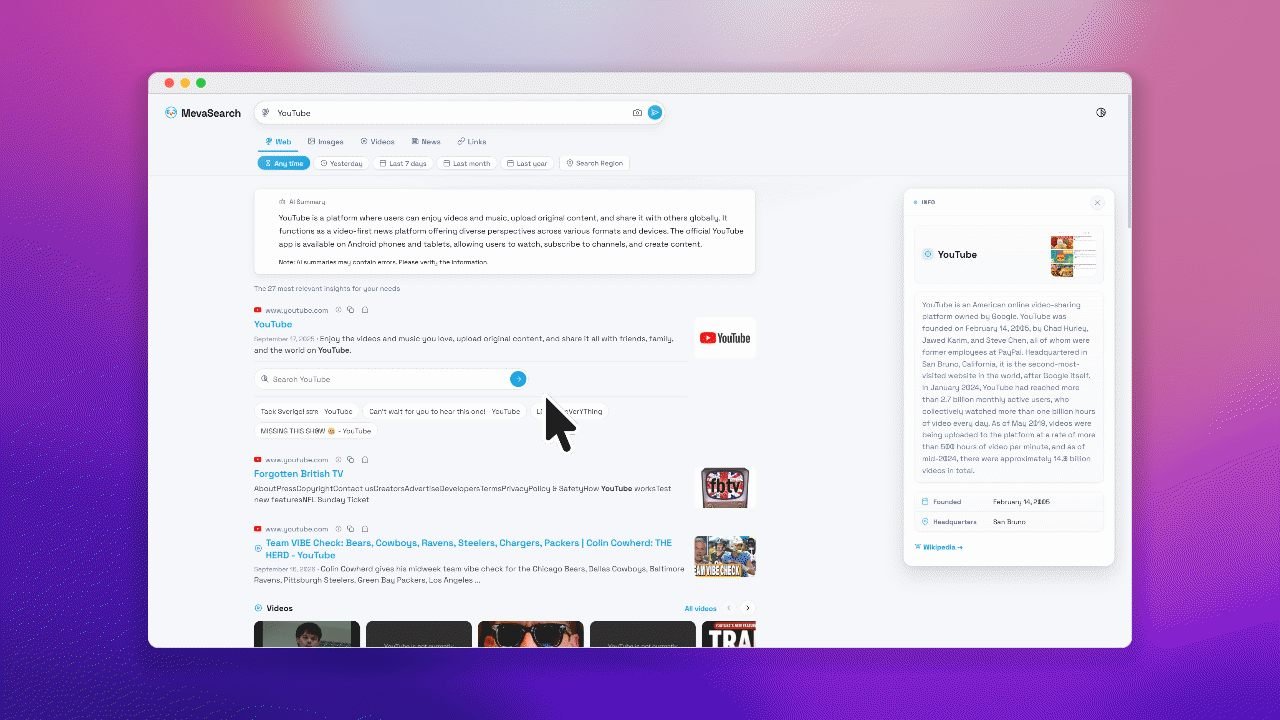
At MevaSearch, every AI feature runs on Claude by Anthropic. That covers short summaries above the results, MevaSearch AI chat, which remembers the conversation and cites a source for each piece of information, related searches and photo search. Requests reach Anthropic from our servers without any account details, and under Anthropic’s commercial terms, data sent through its API is not used to train its models. AI answers are included in every plan, from 200 a month on Lite to 3,000 on Pro.
What happens to your data
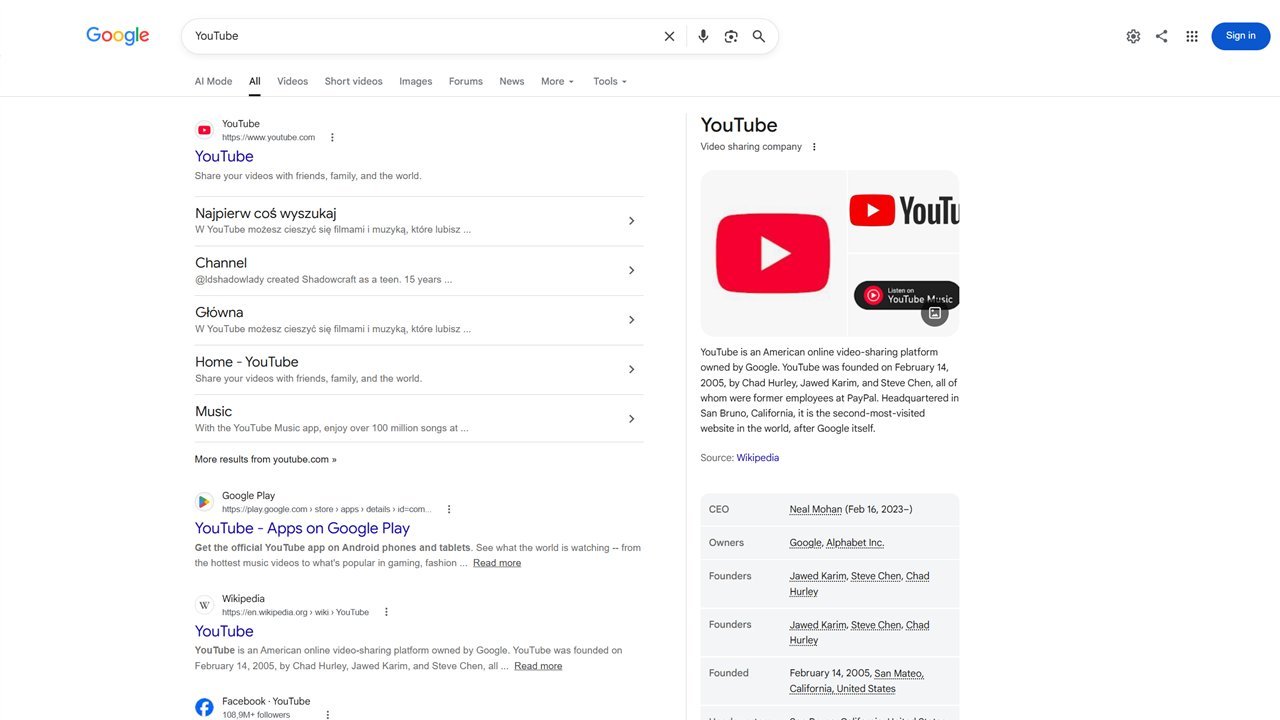
Google’s privacy policy lists the terms you search for among the information it collects, together with location information from sources such as GPS and your IP address, and information about your activity across its services. You can delete some of this data or set it to be deleted automatically after a chosen period, but collecting it is the default way the service works. In the European Union, Google asks before you continue whether it may also use cookies and data for personalised content and ads.
MevaSearch keeps account data and service files on servers in the European Union, mainly in Lithuania, with backups in France. Queries to external providers such as Brave or Mojeek are sent from our servers without your IP address or account details. Visit statistics are collected with our own tool, PriviMetrics, without tracking cookies, and MevaSearch is a Polish company operating under European data protection law.
Prices
Google costs nothing to use. MevaSearch Lite costs 4.99 dollars a month and includes 500 searches and 200 AI answers. Plus costs 14.99 dollars for 1,500 searches, 1,000 AI answers and two extra profiles. Pro costs 24.99 dollars and gives you unlimited searches, 3,000 AI answers and four profiles. The Lite plan comes with a free trial of 3 days, and MevaSearch prices include VAT.
So the honest question is not which one is cheaper, because Google always wins on price. The question is whether a few dollars a month is worth it to you for search without ads and without a profile built from your queries.
Families and businesses
With MevaSearch Plus and Pro you can create extra profiles, each with its own login, so family members never need your password while sharing your plan. For younger users there is Kids Mode, which locks SafeSearch at the strictest level and blocks access to payment settings.
For businesses, MevaSearch offers a separate plan at 89.99 dollars a month. It includes a shared pool of 9,000 searches, 10,000 AI answers, 10 team profiles and VAT invoices issued by the payment provider. For a company, it also means that employees’ work related searches do not feed an advertising profile.
Where Google is stronger
Google has the largest index, decades of experience in ranking, very good local results and a tight connection with Maps, YouTube and its other services. It is free and works well in almost every language. If you need the widest possible coverage and do not mind ads and data collection, Google remains a very capable search engine.
What makes MevaSearch stand out
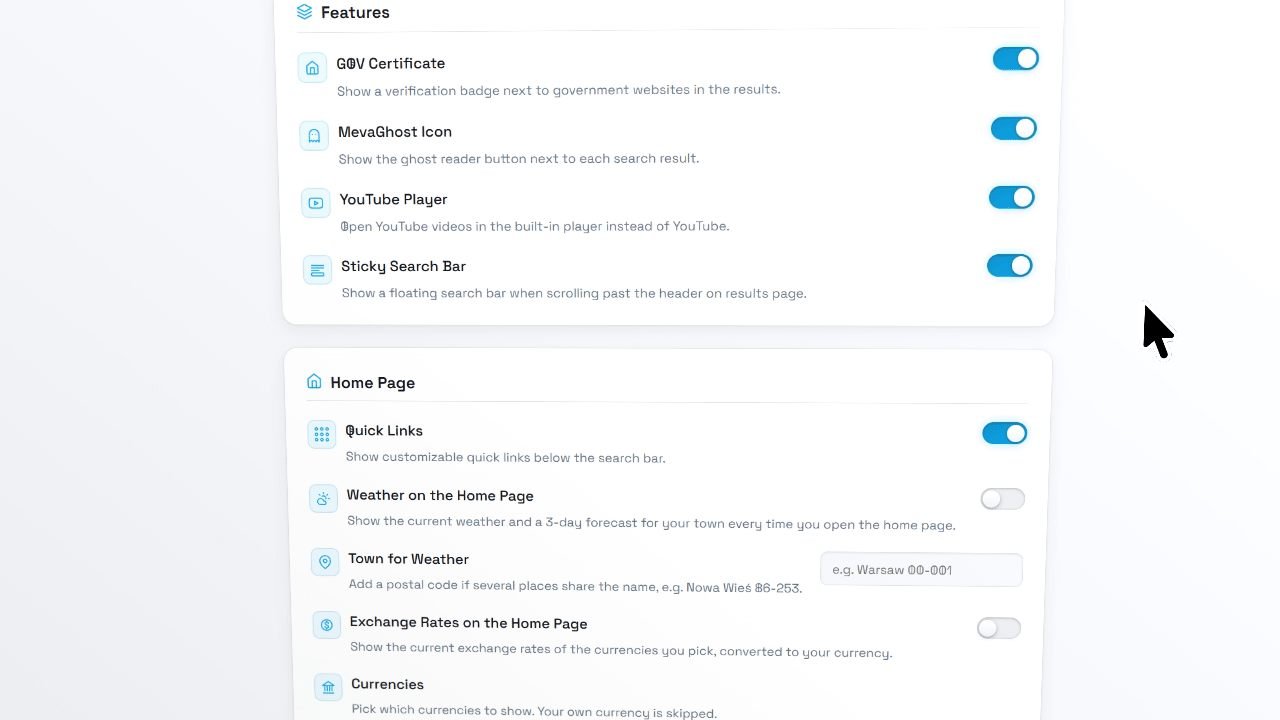
MevaSearch gives you a clean page without ads, AI answers with sources, specialist results for developers and researchers, NetKrypton warnings about scam websites, the option to pin or hide domains, !bang shortcuts, dead link markers and removal of tracking parameters from links. There are also separate tabs for images, videos, news, music and podcasts, an app for Android and an interface in 16 languages. You decide which features you want to use.
Which one should you choose
If price is all that matters and you are comfortable with an ad funded service, Google is the obvious choice. If you want search without ads, without a profile built from your queries, with your data handled in the European Union and with AI from Anthropic instead of Google, MevaSearch is made for you.
Many people use both, with MevaSearch as the default and Google for the occasional very local or very obscure query. With the 3 day trial of the Lite plan, you can see for yourself how often you actually need Google.